
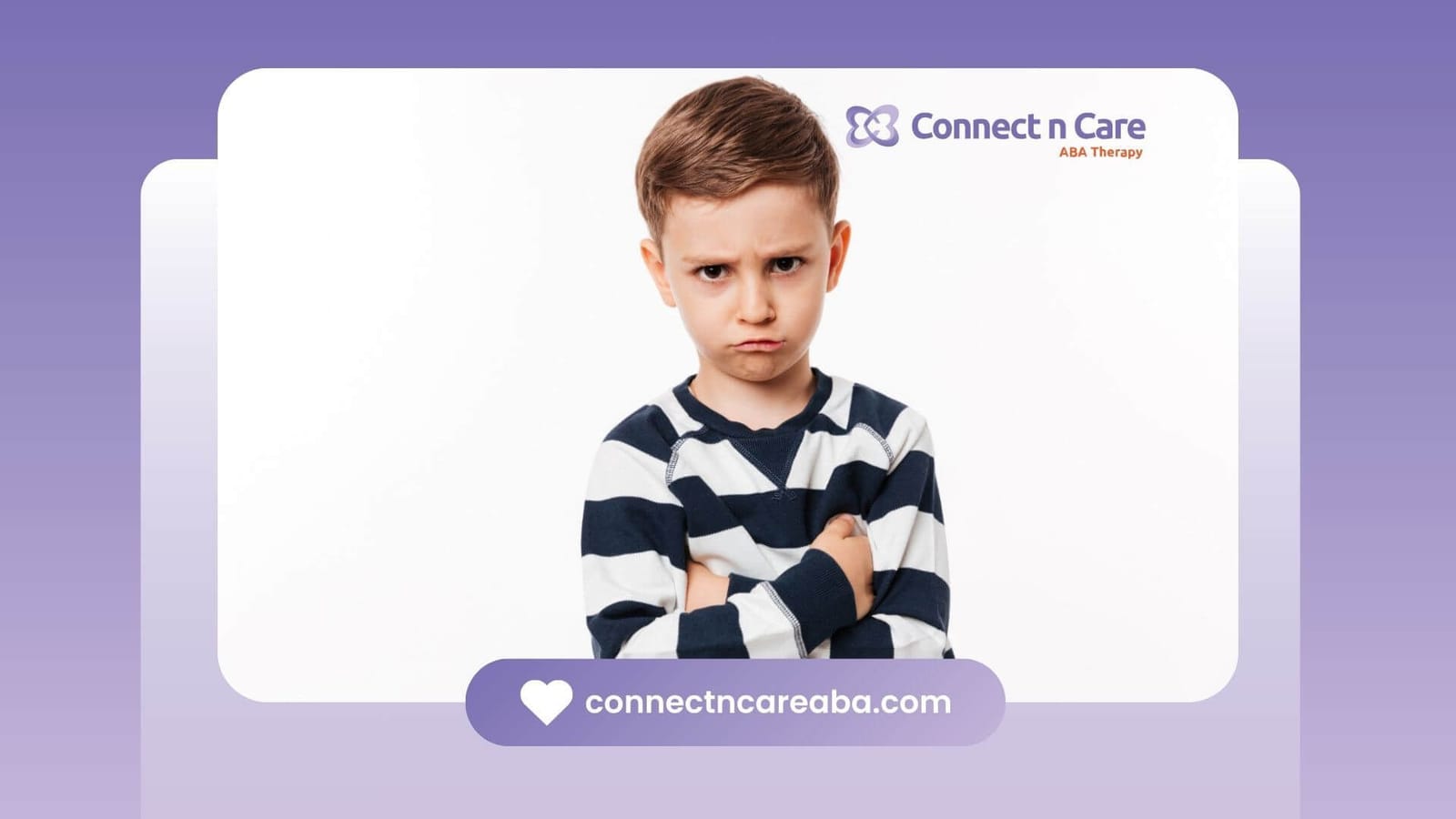
Autism itself does not cause anger. What may look like “anger issues” is often a reaction to feeling overwhelmed, misunderstood, or unable to communicate needs. Sensory overload , sudden changes, and frustration can all trigger strong emotional responses.
Many autistic children experience big feelings but may struggle with emotional regulation. When the brain is overloaded, it can lead to meltdowns, not intentional aggression. These moments are signs of distress, not bad behavior.
Common triggers can include loud sounds, bright lights, changes in routine, difficulty expressing needs, or feeling rushed. With the right support, children can learn coping skills, communication tools, and calming strategies to manage these emotions more comfortably.
Conclusion
At Connect N Care ABA , we help children understand their emotions and develop healthier ways to express them.
Through personalized ABA therapy at home , supportive school-based ABA therapy , and structured center-based ABA therapy , we work with families across North Carolina and Virginia to build emotional regulation and communication skills.
We also provide ABA parent training so caregivers feel confident supporting their child through big feelings.
If your child struggles with frustration or emotional outbursts, we’re here to help. Contact Connect N Care ABA today to start building calmer, more confident days.
Sources:
- https://www.autismparentingmagazine.com/high-functioning-autism-anger/
- https://pmc.ncbi.nlm.nih.gov/articles/PMC6070295/
- https://www.medicalnewstoday.com/articles/how-to-deal-with-autism-anger-in-adults
- https://www.autismspeaks.org/blog/autistic-meltdown-adults
- https://drakeinstitute.com/articles/autism/autism-and-anger-problems