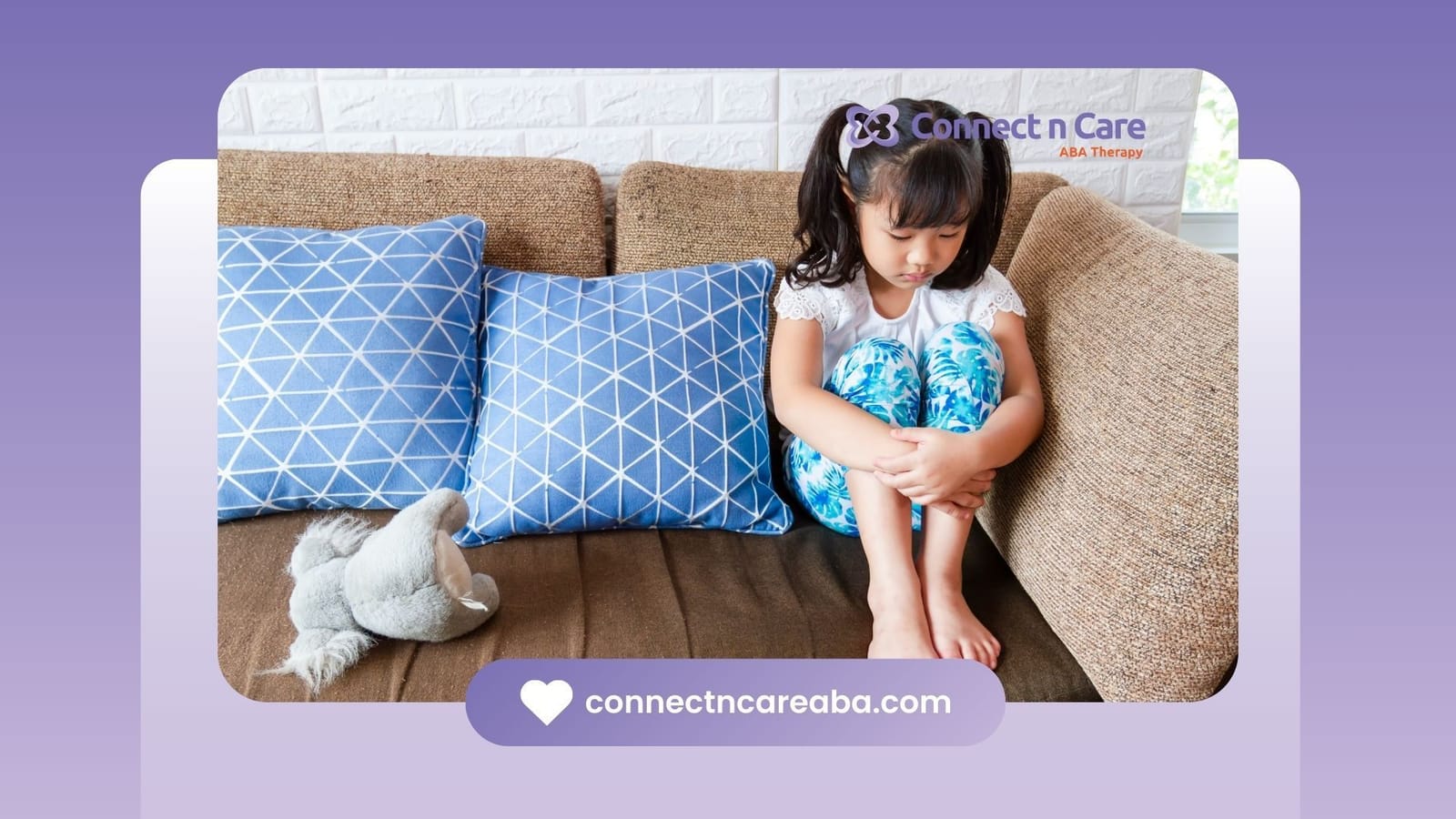


Hyperactivity is not part of the autism diagnosis, but it turns up constantly in autistic children, and usually for reasons that have nothing to do with not wanting to sit still. Sensory needs, anxiety, executive function, and broken sleep are the common drivers. This post covers what is behind the movement, how it differs from ADHD, and what actually helps.
Hyperactivity is most often associated with Attention-Deficit/Hyperactivity Disorder (ADHD), but high energy, impulsivity, and difficulty with focus are familiar to a lot of parents raising autistic children. That overlap is why so many families end up asking whether their child has ADHD, autism, or both.
If your child is young and the constant motion is one of several things you are noticing, early intervention ABA is usually where that conversation starts. You do not need to have everything figured out first.
What Is Autism-Related Hyperactivity?
Hyperactivity in autistic children means excessive movement, restlessness, and impulsive behavior that makes it hard to focus, follow instructions, or take part in structured activities.
Common Signs of Hyperactivity in Autism
- Constant movement, such as running, jumping, or climbing
- Difficulty sitting still for meals or schoolwork
- Impulsivity, or acting without thinking it through
- Trouble transitioning between activities
- Intense sensory-seeking behavior, such as spinning or rocking
- Difficulty settling into quiet activities
Hyperactivity is not a core feature of autism. The CDC describes the core features as differences in social communication and interaction alongside restricted or repetitive behaviors, and lists attention and sleep difficulties as things autistic people may also experience. In practice, the movement shows up often, particularly in children with sensory processing differences.
Autism Hyperactivity vs. ADHD: What's the Difference?
Hyperactivity is a core feature of ADHD and not of autism, which is part of why the two get confused. When an autistic child cannot stop moving, the reason behind it is often different from the reason an ADHD child cannot.
Feature | Autism Spectrum Disorder (ASD) | Attention-Deficit/Hyperactivity Disorder (ADHD) |
Cause of hyperactivity | Sensory-seeking behavior or difficulty with transitions | Impulsivity and difficulty regulating attention |
Focus and attention | Intense focus on specific interests | Easily distracted, hard to sustain focus |
Social interaction | Difficulty reading social cues | Seeks interaction but struggles with impulse control |
Repetitive behaviors | Repetitive movements such as rocking or spinning | Less likely to show repetitive movements |
Response to routine | Prefers predictable routines, struggles with change | May struggle with organization but is not reliant on routine |
Treat that table as general patterns, not a checklist you can diagnose from. The CDC is clear that there is no single test for ADHD, and that sleep disorders, anxiety, and learning differences can all produce ADHD-like behavior. Only a qualified evaluator can sort this out.
Plenty of children have both. In an analysis of national survey data published in the Journal of Autism and Developmental Disorders, 57 percent of autistic girls aged 12 to 17 and 49 percent of autistic boys also carried an ADHD diagnosis. If you want to go deeper on the overlap, we cover it in our post on sensory issues in ADHD and autism.
Causes of Hyperactivity in Autism
The driver varies from child to child. These are the ones that come up most.
Sensory Processing Differences
Many autistic children are hypersensitive or hyposensitive to sound, light, and texture. Hyperactivity is often sensory-seeking, where a child keeps moving in order to get the input their body is asking for.
Difficulty with Self-Regulation
Autistic children often find emotional and behavioral self-regulation hard. That shows up as impulsivity, trouble managing frustration, and difficulty coming back down once activated.
Anxiety and Overstimulation
Busy or unpredictable environments can tip a child into overstimulation, and the result looks like pacing, jumping, or hand-flapping. Some children respond to stress by getting physically faster, not slower.
Executive Function Challenges
Executive function covers planning, organizing, and impulse control. Delays in those skills make it harder to stay with a task, follow multi-step instructions, or sit through something long.
Sleep Difficulties
Sleep problems are common in autistic children, and a short night shows up as more movement the next day. Trouble falling asleep, staying asleep, and getting restful sleep all feed into it. Our post on sleep positions and sensory needs covers the sensory side of bedtime.
How to Manage Hyperactivity in Autistic Children
Hyperactivity is manageable once you know what is driving it. In our ABA sessions, the strategies that hold up are usually the ones that change the environment first and ask the child to change second.
Create a Sensory-Friendly Environment
A structured, calming space reduces overstimulation before it builds. That can mean soft lighting and less background noise, fidget toys or weighted blankets for input, and a quiet corner set aside for regulating.
Encourage Physical Activity
Many autistic children need movement, so build it in on purpose rather than waiting for it to spill out. Trampolines, outdoor play, swimming, martial arts, yoga, and deep-pressure activities all provide sensory input and support self-regulation.
Implement Routine and Structure
Predictability lowers anxiety and restlessness. A visual schedule using pictures or symbols makes the day legible to a child who cannot yet hold the sequence in their head.
Teach Self-Regulation Techniques
Children can learn to notice and manage their own escalation. Deep breathing, calming sensory activities like squeezing a stress ball, and social stories all help. This is the area where ABA parent training earns its place, because the techniques only stick if the adults in the house are using them the same way.
Use Positive Reinforcement
ABA therapy uses reinforcement to build the behaviors you want more of. Recognizing a child for staying with a task or following an instruction strengthens self-control more reliably than correcting the opposite.
Address Sleep Issues
Better sleep hygiene lowers next-day hyperactivity. A consistent bedtime routine, less screen time before bed, and blackout curtains or white noise are the usual starting points. Sleep is also one of the goals in-home ABA therapy is well suited to, because the routine has to work in your actual house.
Know When to Bring In a Professional
If hyperactivity is interfering with daily life, a behavior analyst, occupational therapist, or developmental specialist can build strategies around your specific child rather than the general case.
Getting Support in North Carolina and Virginia
Two things change once you move from wondering about the behavior to doing something about it, and both are state-specific.
The Diagnosis Decides the Coverage Path
Both states require state-regulated health plans to cover autism treatment, and both laws are written around an autism diagnosis specifically. North Carolina's mandate covers adaptive behavior treatment for individuals 18 years of age or younger, up to $40,000 per year, adjusted annually using the Consumer Price Index. Virginia's mandate applies at any age with no visit limits, and applied behavior analysis carries an annual maximum benefit of $35,000 unless the insurer chooses to offer more.
That wording matters when your child has not been evaluated yet. If the evaluation lands on ADHD alone, it sits outside these autism mandates, and behavioral treatment would run through your plan's general behavioral health benefit instead. Ask your plan which benefit category applies before you book anything.
Virginia Medicaid families have one more thing worth tracking. DMAS has published ABA policy changes that would let children age five and under start services on a provisional autism diagnosis for up to a year, taking effect once federal approval and manual updates are complete. If your child is young and still in the evaluation queue, ask where that stands.
If the Problem Is Showing Up at School
Constant movement gets noticed in a classroom before it gets noticed anywhere else, and both states run on a fixed clock once you put the request in writing.
North Carolina allows 90 calendar days from referral to finish evaluations, determine eligibility, develop an IEP, and obtain parent consent for services. Virginia allows 65 business days from receipt of a referral to the eligibility decision, and referrals may be made by any source, including a parent.
Put the request in writing, date it, and keep your copy. Families we work with in Charlotte often tell us a verbal request went nowhere until they sent the same thing in writing. One caution: a school eligibility is not a medical diagnosis, so it will not, on its own, unlock therapy coverage.
Conclusion
Hyperactivity is common in autistic children, and it is usually driven by sensory needs, anxiety, executive function, or poor sleep rather than by defiance. Once you understand which of those is at work, structured routines, sensory-friendly spaces, better sleep, and positive reinforcement give you somewhere concrete to start. The overlap with ADHD is real and common enough that a qualified evaluator, not a checklist, should be the one to sort it out.
Ready to Take the Next Step?
Connect n Care ABA provides in-home ABA therapy, school-based ABA, and ABA parent training to families across North Carolina and Virginia.
If the constant motion is wearing your family down and you want help figuring out what is underneath it, contact our team.
SOURCES:
- https://www.cdc.gov/autism/signs-symptoms/index.html
- https://www.cdc.gov/adhd/signs-symptoms/index.html
- https://link.springer.com/doi/10.1007/s10803-022-05803-9
- https://www.ncleg.gov/EnactedLegislation/Statutes/HTML/BySection/Chapter_58/GS_58-3-192.html
- https://law.lis.virginia.gov/vacode/title38.2/chapter34/section38.2-3418.17/
- https://vamedicaid.dmas.virginia.gov/bulletin/applied-behavior-analysis-aba-policy-changes
- https://www.dpi.nc.gov/special-education-referral-school-age/download?attachment=
- https://law.lis.virginia.gov/admincode/title8/agency20/chapter81/section60/